Table of Contents
The Village Shop
The village of Barnoldby le Beck was once very different from how it appears today. It was once a small, unassuming village concentrated in the area around the church of St Helen with farms towards the outer radius of the village itself, a complete and perhaps more pleasing contrast to the village today.
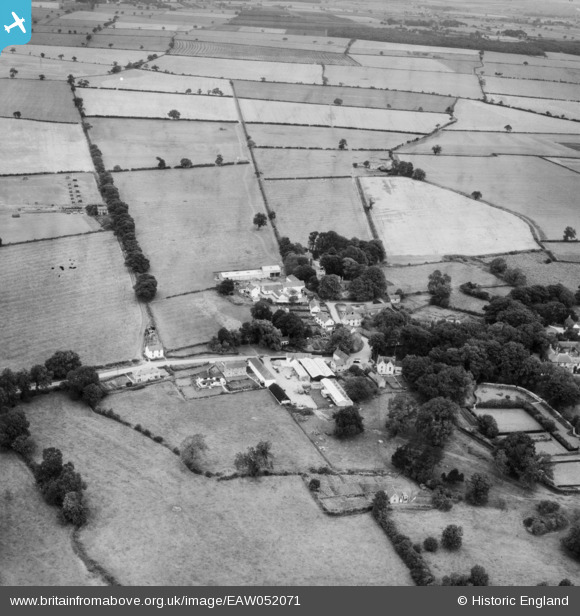
I am very fortunate that my grandfather can remember the village as it was in the photograph above, though he was very young. It was he who told me of the Hewson sisters, Annie and Emily, whom he used to visit in their cottage in the centre of the village until they passed away in 1963 and 1962 respectively.
Annie and Emily are 2 of the 6 children of William Hewson and Emma Shaw. In order of birth we have Cornelius John (b. 1862), Sarah Desdemona (b. 1864), Mary Elizabeth (b.1868), Annie Ada (b. 1873), Ellen Henrietta (b. 1877) and Emily Gertrude (b. 1881). Mary unfortunately didn’t live beyond childhood, passing away in 1875. Ellen, as my 2nd Great Grandmother, is my connection to the Hewson family.
William Hewson and Emma Shaw married sometime around 1860, as William is listed as the head of the household in the 1861 census. I believe they ran the shop into their declining years as the occupation of Grocer is noted on the 1911 census. Emma passed on 22 October 1921 aged 83, and William passed on 30 August 1828. They are both interred in the churchyard of St Helen’s, amongst their ancestors.
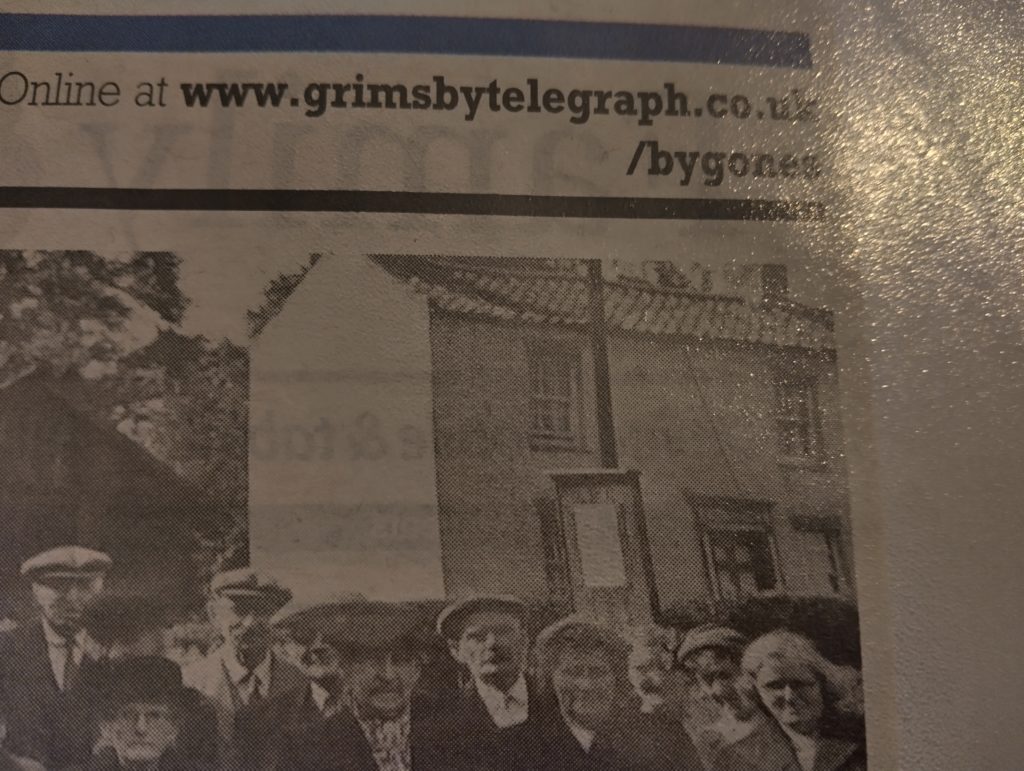
The fate of the cottage and shop in the centre of Barnoldby appears to have been sealed after the death of William and Emma, as Tates (now Spar) built a small shop in the village, and upon the passing of Annie and Emily the building was demolished, probably sometime in the mid 60’s. The last photograph I know of is out of the Bygones newspaper showing the building in the mid 50’s.
Thomas Hewson Esq and A Narrative of the Hewson and Bonsor Families
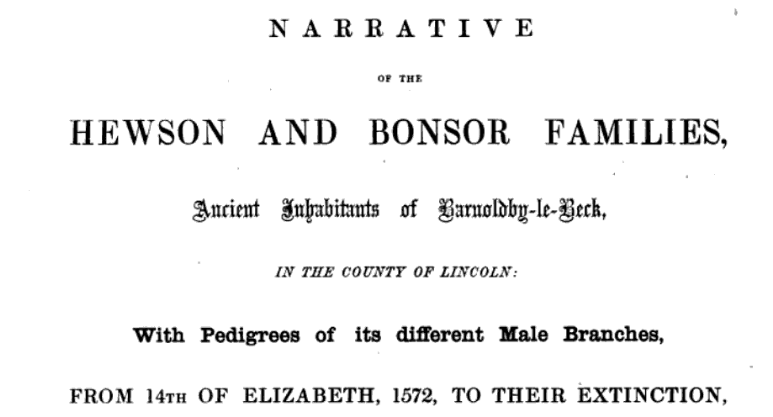
Perhaps the most valuable resource that I found during my research was a book, written by my 9th Great Uncle, Thomas Hewson Esquire, called “A Narrative of the Hewson and Bonsor Families – Ancient Inhabitants of Barnoldby le Beck”. This book, digitised and available to view on Google Books, dating from 1822, details the history of the family back to the beginning of records being kept in the 1540s. The information correlates with accessible records, meaning that I could incorporate the work with my own research. This gives us a traceable line back 12 generations from myself to John Hewson (1540-1604) in Barnoldby le Beck.
In regards to the family before the time of the Reformation we have no detail, however Thomas believed to be in possession of “information sufficient to authorize and confirm a belief that the family was in high repute, respectable, and numerous, in the town of Barnoldby long before the time of Elizabeth; for in the early part of her reign there were resident in that place five separate increasingly contemporary families of Hewsons“. Thomas also mentions of others who branch from the same line at that time, so we can assume an ancient lineage back to the conquest, which Thomas also claims, “that their progenitors have been residents in that town from the first assumption of surnames, which was buy our Norman ancestors first begun about the year A.D. 1200“.
Thomas Hewson Esquire was born in 1753 to Thomas Hewson and Jane Colebeck, and was one of 6 children. Interestingly, the 1841 census states that he was born in Holton le Moor, and indeed his grandfather Richard died in Holton le Moor in 1733, though he was born in Barnoldby. I will explore this in the next section. Thomas married Frances Nainby, daughter of John and Mary of Waltham, a respectable and ancient family who possessed considerable landed property, in 1781 at Barnoldby le Beck.
Much of Thomas’ activity after his marriage is vague and what information I have found I have not been able to verify as yet, however with the help of Thomas himself I can say that after his marriage and the death of his father in 1780, he continued the farming business at Waltham until 12th May 1802. He states at this time he “let a lease of his premises there, and disposed of his farming business to the Rev, George Gray, of Laceby, and at the same time engaged in a merchantile concern at Croydon, in the county of Surrey”. In 1816 Thomas, being possessed of “property ample and sufficient to enable him and his wife to live in respectability and independence” declined his merchantile concern and also disposed of the Waltham estate given the price of land being so much above it’s real value. Thomas was also churchwarden of St Mary’s in Croydon, and helped facilitate a repair of the east end in 1817. There is a plaque to this day crediting this to him.
The records catch up with us and show that Thomas and Frances are resident in Croydon in 1831. They spent the rest of their days in Croydon, with Frances passing in 1821, aged 65. Thomas Hewson lives until 1844, when he passes away aged 91. They are both interred in a vault in the neighbouring village of Sanderstead.
Thomas Hewson Esq and the Rev. George Oliver
The Reverend George Oliver (1782-1867) was an interesting discovery during my research, despite not being in the family. He was born at Papplewick, Nottinghamshire in 1782, and amongst other things was a cleric, freemason and a writer. It is in his latter pastime as writer that the interest comes.
He spent a period of time as vicar of Clee, then a small village a few miles from Barnoldby. During this time he wrote a number of books on the history of the area. Most notably The Monumental Antiquities of Great Grimsby in 1825, and Ye Byrde of Gryme, 1866, both of which I am very fortunate to have found copies of.
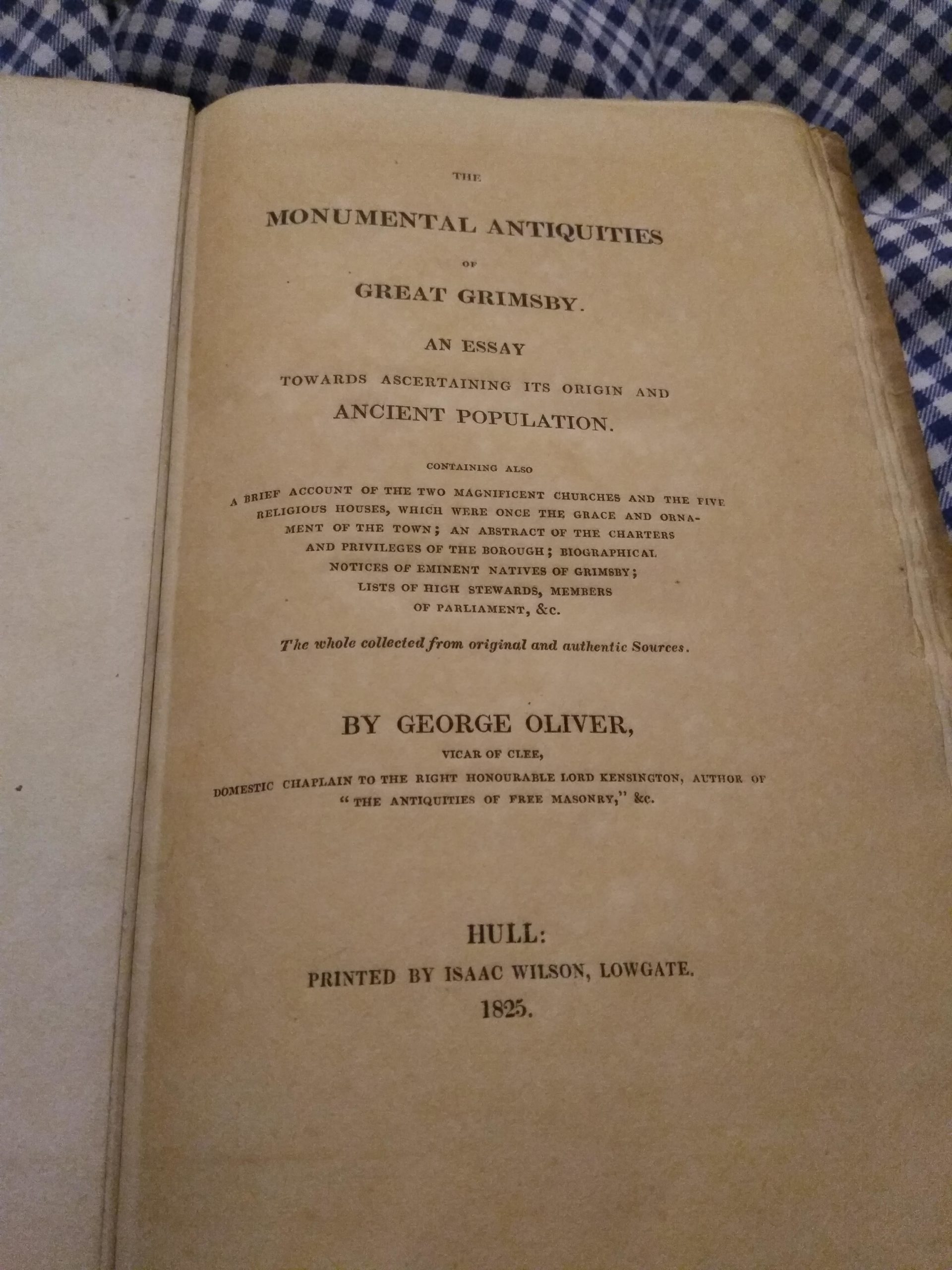
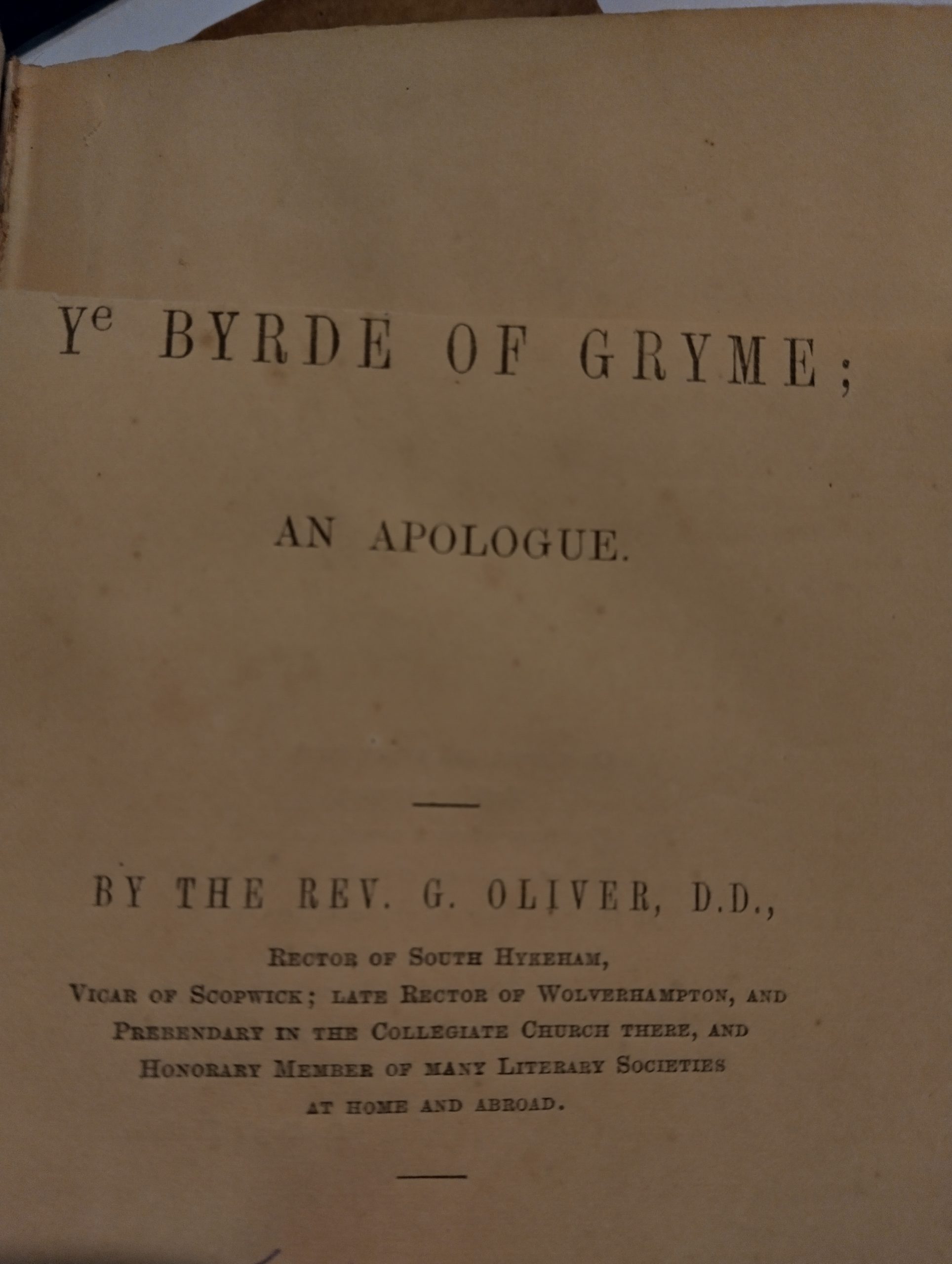
Out of the two, it is the Monumental Antiquities of Great Grimsby that has particular interest in the family history. Thomas Hewson is credited in the preface of the book with providing assistance with the information.
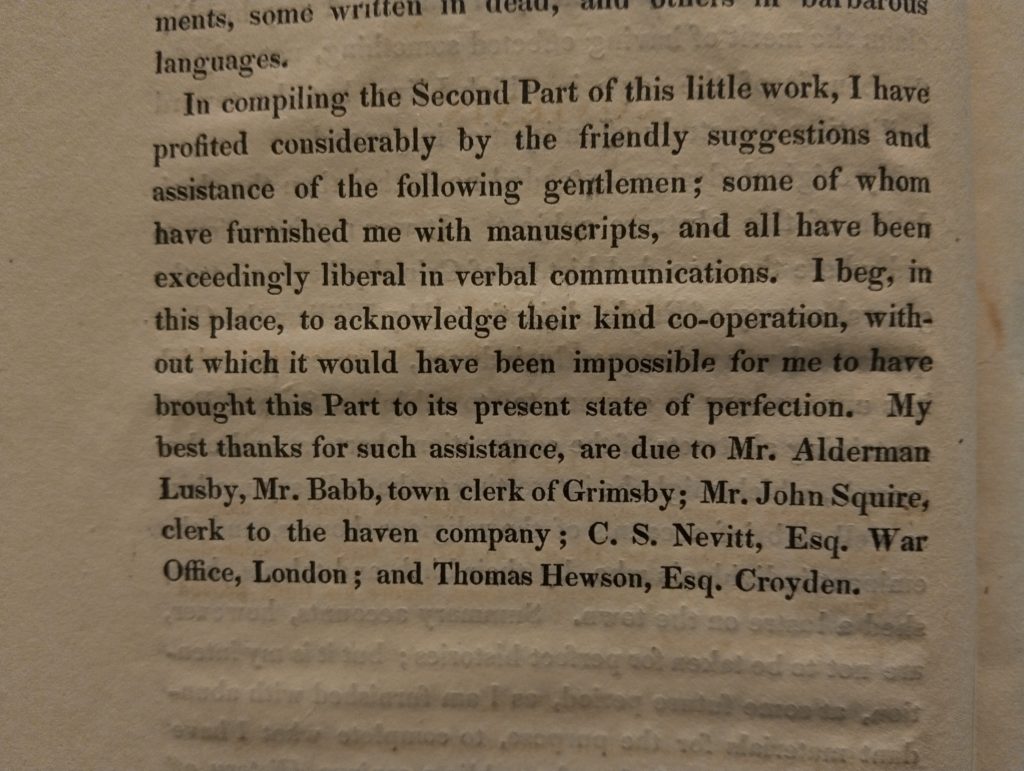
The communication between these two gentleman persisted after the publication of the Monumental Antiquities, at least as far as to 1830, when Thomas read and replied to a letter sent to him by the Rev. George Oliver on 16th December 1829. I know this because of a fortunate stumbling upon a letter on an online auction site in Thomas’s own hand.